Sustainability in the United States has evolved from simple recycling bins to high-tech, integrated home systems. As we move through 2026, American homeowners are prioritizing “Smart Sustainability”—using technology to reduce carbon footprints while simultaneously lowering monthly utility bills.
If you want to modernize your home this year, here are the leading eco-tech trends dominating the US market.
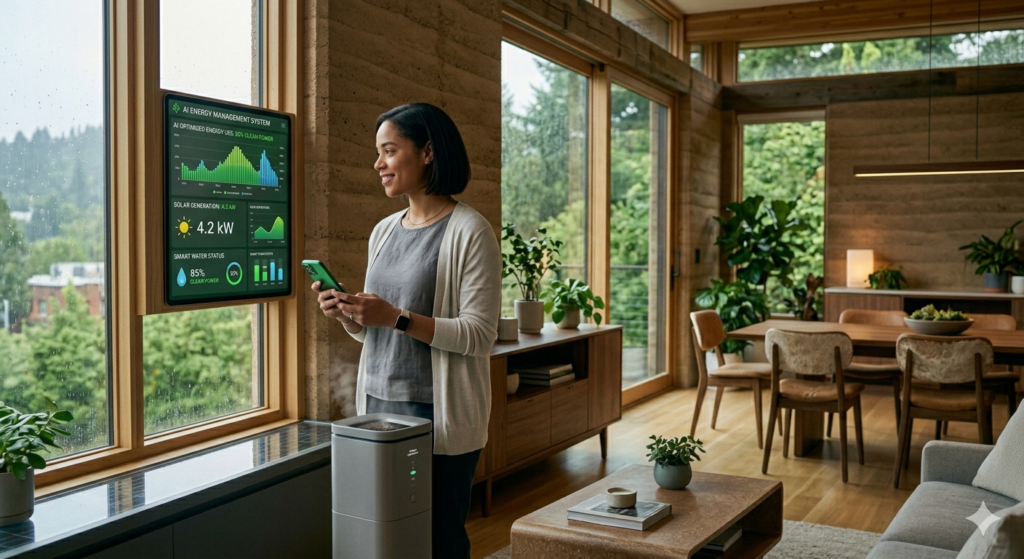 1. AI-Powered Energy Management Systems
The “Agentic Economy” has officially entered our living rooms. New AI home managers do more than just turn off lights; they analyze local weather patterns and electricity price fluctuations to optimize your HVAC and appliance usage.
-
Why it’s trending: It offers hands-free savings of up to 30% on energy bills.
-
Top Pick: Systems that integrate directly with smart grids to sell excess power back to the utility company.
2. Solar-Transparent Furniture & Windows
One of the most requested trends by US interior designers in 2026 is “solar-transparent” technology. Imagine a nightstand or a window that looks like normal glass but secretly functions as a solar panel to charge your devices.
-
Key Benefit: Seamlessly generates clean energy without the need for bulky rooftop panels.
3. Smart Graywater Recycling Kits
With water scarcity concerns growing in states like California and Arizona, smart water management is a top search. These compact, DIY-friendly kits filter water from your shower or sink and repurpose it for gardening or toilet flushing.
-
Tech Edge: Sensors track water quality and usage stats directly on your smartphone.
4. Zero-Waste Kitchen Tech: Smart Composters
Forget the smelly compost bin in the backyard. The latest generation of smart kitchen composters can turn food scraps into nutrient-rich soil in under 4 hours, completely odor-free.
-
Why Americans love it: It supports the “Zero Waste” movement while being convenient for urban apartment dwellers.
5. Biodegradable and 100-Year Furniture
Sustainability in 2026 also means fighting “fast furniture.” Trends are shifting toward items built to last a century or made from innovative biodegradable materials like mushroom leather (mycelium) and algae-based plastics.
-
Key Feature: “Circular design” ensures that when the product’s life ends, it leaves zero trace in a landfill.
Eco-friendly home tech in 2026 is no longer a niche luxury; it’s a smart financial strategy. By integrating these tools, you aren’t just saving the planet—you’re future-proofing your most valuable asset: your home.
