The Rise of the Eco-Smart Home: Why Sustainability is the Ultimate Luxury in 2026
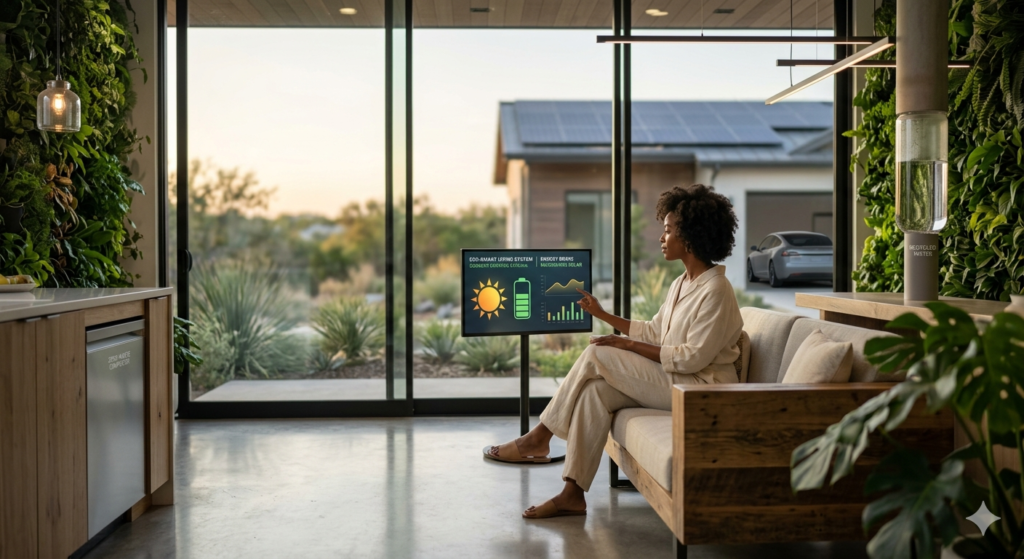 For years, “going green” felt like a series of sacrifices. But in 2026, a new wave of Eco-Smart Home technology has hit the mainstream in the United States, proving that living sustainably can actually be more convenient, luxurious, and cost-effective than traditional living. From the suburbs of Austin to the apartments of Brooklyn, Americans are embracing homes that don’t just sit on the land, but actively work with it.
The shift is driven by a powerful combination of advanced AI and high-efficiency green tech, creating a living environment that manages itself.
The Core Pillars of the 2026 Eco-Smart Home
1. AI-Driven Energy Orchestration
Modern smart homes now feature “Energy Brains”—AI systems that predict your power needs. These systems automatically switch between solar storage, the local grid, and home battery packs based on real-time electricity prices and weather forecasts, potentially saving US homeowners thousands of dollars annually.
2. Zero-Waste Kitchen Tech
Zero-waste living has gone high-tech. New smart composters can turn food scraps into nutrient-rich soil in under four hours, completely odorless. Meanwhile, AI-enabled refrigerators track expiration dates and suggest recipes based on what you already have, drastically reducing the $160 billion of food wasted in the US each year.
3. Intelligent Water Conservation
With water scarcity becoming a growing concern in the Western US, smart greywater recycling systems are becoming a standard feature. These systems treat water from showers and sinks to be reused for landscaping and toilets, reducing a household’s water footprint by up to 40%.
4. Bio-Atmospheric Air Purifiers
Instead of just plastic filters, 2026 homes are integrating “living walls” that use specific plant species combined with AI-controlled airflow to naturally scrub toxins from the air. It’s a return to nature, powered by the latest in botanical science.
Why It’s Going Viral
This movement is viral because it solves a universal American pain point: rising utility costs. The Eco-Smart home isn’t just an environmental statement; it’s an economic strategy. In 2026, the coolest home on the block isn’t the one with the biggest TV—it’s the one with the smallest carbon footprint.
Conclusion
The future of living is intelligent, efficient, and deeply connected to the environment. By adopting eco-smart technologies, we aren’t just protecting the planet for future generations; we are building better, smarter lives for ourselves today.
Which eco-smart upgrade are you most excited to add to your home? Let us know in the comments below!
